
Heal Stronger: Rehabilitation for Dislocations and Fractures
Suffering a broken bone or a dislocated joint is a traumatic, painful experience. In the immediate aftermath, your focus is entirely on getting to the emergency room, getting a cast set, or having a joint carefully put back into place.
Many people mistakenly believe that once the cast comes off or the sling is removed, the healing process is completely over. In reality, that is just the beginning of your recovery.
At Encore Physiotherapy and Wellness, we bridge the gap between initial medical treatment and your full return to normal life. We help you overcome the severe stiffness and muscle loss that follow a major injury, ensuring you heal correctly and safely.
Understanding Your Injury
While they are treated differently in the emergency room, both fractures and dislocations cause significant trauma to the surrounding soft tissues (muscles, ligaments, and tendons).
| Injury Type | What Happens | The Rehabilitation Challenge |
| Fracture (Broken Bone) | A partial or complete break in the bone, often requiring prolonged immobilization in a cast, boot, or via surgical hardware (pins/plates). | Overcoming severe joint stiffness, safely bearing weight again, and rebuilding muscle that has shrunk (atrophied) while in the cast. |
| Dislocation | The ends of your bones are forced out of their normal position within a joint (commonly the shoulder, kneecap, or fingers). | Ligaments are severely stretched or torn when the joint pops out. The joint becomes highly unstable and prone to re-dislocating without targeted strength training. |
The Problem with Immobilization
To allow a bone to knit back together or a ligament to scar down, your body part must be kept completely still. However, this prolonged immobilization has side effects:
Muscle Atrophy: Muscles weaken and shrink significantly when they aren’t used for weeks.
Joint Stiffness: The joint capsule becomes tight, making it incredibly painful and difficult to bend or straighten your limb once the cast is off.
Circulation Issues: Lingering swelling often pools in the hands or feet due to a lack of muscle movement to pump the fluid away.
The Encore Roadmap to Recovery
You cannot simply jump back into your daily routine after a fracture or dislocation. Doing so risks re-injury, chronic pain, or permanent stiffness. Our physiotherapists create a carefully paced, customized roadmap to safely restore your function.
Your rehabilitation plan will evolve through several critical phases:
1. Managing Pain and Swelling
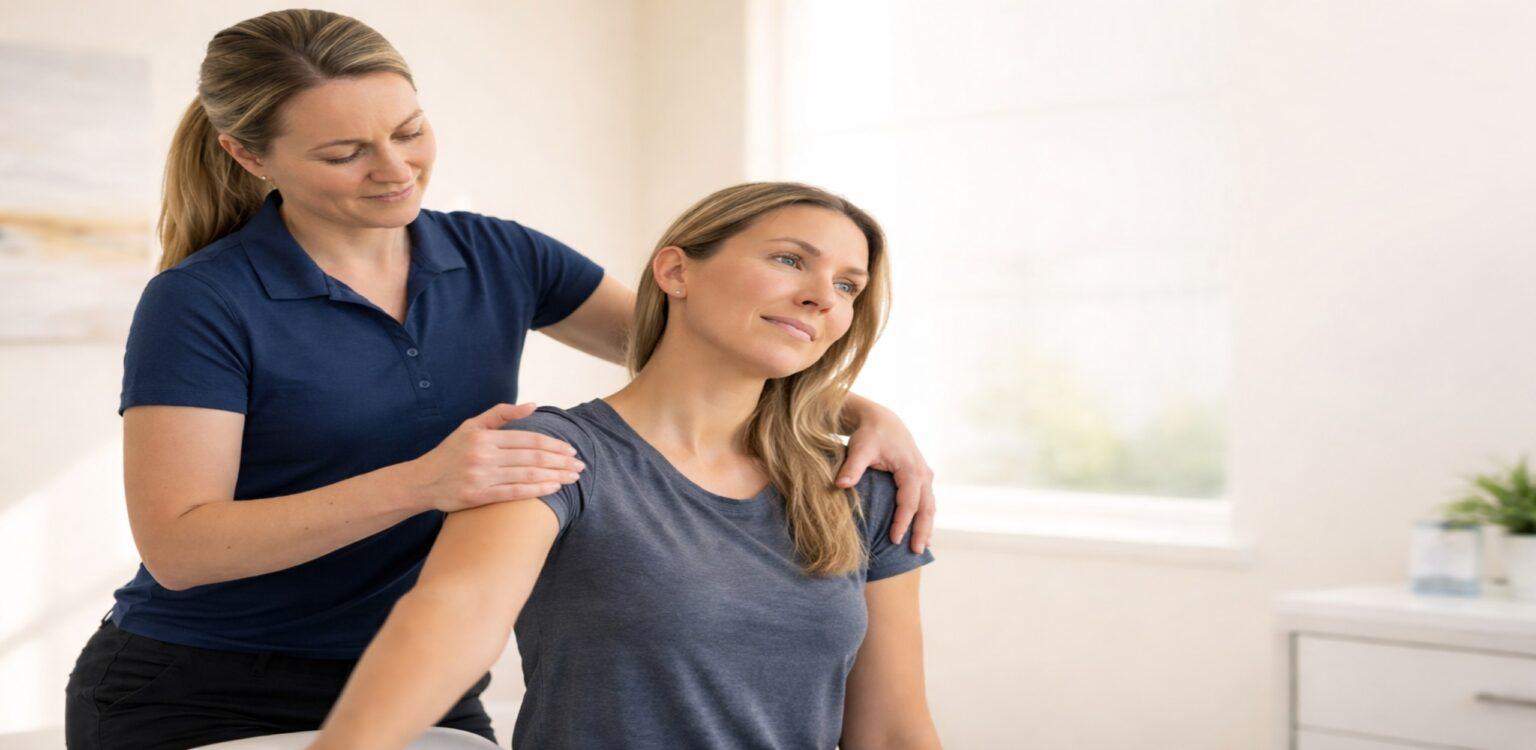
Immediately after your cast or sling is removed, the area will be tender and swollen. We use gentle modalities (like ice, heat, or ultrasound) and soft tissue massage to flush out pooled fluid and calm your sensitive nervous system.
2. Restoring Range of Motion
A joint that hasn’t moved in six weeks will feel “locked.” We use gentle, hands-on joint mobilizations and passive stretching to safely break through that stiffness without damaging the newly healed bone or tissue.
3. Progressive Strengthening
Once the joint moves freely, we must rebuild its “armour.” We use targeted resistance exercises to wake up dormant muscles and rebuild the strength you lost during immobilization.
4. Stability and Proprioception (Crucial for Dislocations)
When a joint dislocates, the nerves that tell your brain where your joint is in space get stretched and damaged. We use specialized balance and stability drills to retrain this “brain-body” connection. This is the absolute most important step to ensure your shoulder or kneecap doesn’t pop out again in the future.
Don’t Let an Injury Limit Your Future
Healing from a fracture or dislocation takes time, but you do not have to navigate the stiffness, weakness, and frustration alone.
Ready to find long-lasting relief? Reach out to our dedicated team to schedule your personalized assessment today.
 Visit Us: 809 Victoria St N, Kitchener, oN.
 Email: clinic@encorephysiotherapy.ca
Call us or book appointment at Encore Physiotherapy and Wellness to schedule your comprehensive assessment and take the first step toward reclaiming your stability.